
Controlling vehicle speed is an important part of maintaining safety in areas where pedestrians, vehicles, and other road users share the same space. Roads inside residential societies, parking areas, schools, hospitals, industrial premises, commercial properties, and private facilities often require effective speed-control solutions.
Rubber speed breakers are a practical traffic-management solution designed to encourage vehicles to reduce speed at selected locations. They are commonly manufactured from durable rubber or rubber-based materials and can be installed on different types of surfaces when the appropriate product and fixing method are used.
Unlike permanent concrete speed breakers, modular rubber speed breakers can generally be installed, replaced, or extended in sections. Their modular construction also makes them suitable for applications where flexibility and controlled vehicle movement are required.
In this guide, we will explain what rubber speed breakers are, their types, common applications, benefits, installation considerations, maintenance requirements, and how to choose the right speed breaker for your project.
What Is a Rubber Speed Breaker?
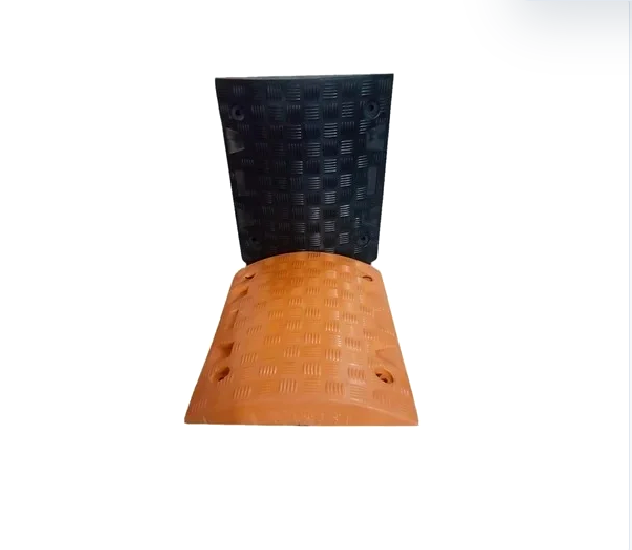
A rubber speed breaker is a modular traffic-calming device installed across a roadway to encourage drivers to reduce vehicle speed.
Rubber speed breakers are typically designed with a raised profile and may include reflective elements, such as reflective strips or cat’s-eye reflectors, to improve visibility.
They are available in different sizes, heights, designs, and load capacities depending on their intended application.
Rubber speed breakers are commonly used in:
- Parking areas
- Residential societies
- Industrial premises
- Warehouses
- Commercial properties
- Private roads
- School and institutional premises
- Hospitals
- Factory entrances and internal roads
- Pedestrian-priority areas
The correct product should always be selected according to the road layout, traffic conditions, vehicle types, applicable requirements, and installation specifications.
Why Are Speed Breakers Important?
Vehicle speed can affect the time available for drivers to react to pedestrians, obstacles, other vehicles, and changes in road conditions.
Speed-control measures can therefore be useful in areas where lower vehicle speeds are required.
Properly planned speed-control installations can help:
- Encourage vehicles to reduce speed
- Improve traffic movement within controlled areas
- Increase driver awareness
- Improve safety near pedestrian zones
- Control vehicle movement in parking areas
- Reduce excessive speed inside private premises
- Improve traffic management in industrial facilities
- Create more controlled movement around entrances and exits
Speed breakers should be installed at appropriate locations and designed according to the requirements of the specific site.
Types of Rubber Speed Breakers
Different applications may require different speed breaker designs. Some commonly used options include the following.
1. Standard Rubber Speed Breakers
Standard rubber speed breakers are designed for general traffic-calming applications.
They are commonly used in residential societies, parking areas, commercial premises, private roads, and other locations where controlled vehicle speeds are required.
Their modular design allows sections to be arranged according to the width of the road.
2. Heavy-Duty Rubber Speed Breakers
Heavy-duty rubber speed breakers are designed for areas that experience regular movement of heavier vehicles.
They may be considered for:
- Industrial facilities
- Warehouses
- Factory premises
- Logistics areas
- Commercial vehicle routes
- Heavy-traffic private roads
When selecting a heavy-duty speed breaker, consider the expected vehicle load, frequency of traffic, road surface, fixing method, and manufacturer’s specifications.
3. Reflective Rubber Speed Breakers
Reflective speed breakers feature reflective components that improve visibility, particularly during nighttime.
They can be useful in locations where vehicles operate after dark and the speed-control installation needs to remain clearly visible to approaching drivers.
4. Modular Rubber Speed Breakers
Modular speed breakers are made from individual sections that can be joined to cover the required road width.
One advantage of modular construction is that damaged sections can potentially be replaced without replacing the entire installation, depending on the product design.
5. Rubber Speed Humps
Rubber speed humps are another form of modular traffic-calming product. Their profile and dimensions may vary according to their intended application.
They are commonly considered for areas where vehicles need to slow down before entering pedestrian or high-activity zones.
Common Applications of Rubber Speed Breakers
Rubber speed breakers can be used in a variety of controlled traffic environments.
Rubber Speed Breakers for Parking Areas
Parking facilities often have pedestrians moving between parked vehicles and driving lanes.
Installing suitable speed breakers can encourage drivers to maintain controlled speeds inside parking areas.
They can be used near:
- Parking entrances
- Exit routes
- Pedestrian crossings
- Internal parking lanes
- Ramp approaches
- High-activity pedestrian areas
Rubber Speed Breakers for Residential Societies
Residential societies have frequent interaction between vehicles and pedestrians.
Children, pedestrians, cyclists, and vehicles may share internal roads, making speed management an important part of community traffic planning.
Rubber speed breakers can be installed at selected locations such as:
- Society entrances
- Internal roads
- Pedestrian zones
- Sharp turns
- Parking approaches
- Areas near community facilities
Industrial Speed Control
Industrial premises may have cars, trucks, forklifts, and other vehicles operating within the same facility.
Speed breakers can help establish controlled vehicle movement in selected zones.
They may be used near:
- Factory entrances
- Warehouse areas
- Loading zones
- Internal roads
- Employee parking
- Pedestrian movement areas
For industrial applications, product load capacity and installation quality are particularly important.
Commercial Properties
Shopping complexes, offices, hotels, hospitals, and other commercial properties may use speed-control products to manage traffic within their premises.
Rubber speed breakers can be installed at entrances, parking areas, service roads, and other locations where controlled speeds are required.
Schools and Institutional Areas
Areas around schools and institutions can experience significant pedestrian movement.
Where permitted and appropriate, speed-control measures can be incorporated into the site’s traffic-management plan to encourage vehicles to slow down.
Benefits of Rubber Speed Breakers
Rubber speed breakers offer several practical benefits when appropriately selected and installed.
1. Effective Speed Control
The primary purpose of a speed breaker is to encourage drivers to reduce speed when approaching designated areas.
2. Modular Construction
Many rubber speed breakers consist of separate sections that can be installed across different road widths.
This makes them adaptable to various site layouts.
3. High Visibility
Many products incorporate reflective elements or contrasting sections to improve visibility.
Better visibility can help drivers identify the speed-control device before reaching it.
4. Suitable for Multiple Applications
Rubber speed breakers can be used in residential, commercial, industrial, parking, and private-road environments.
5. Easier Replacement of Sections
With modular designs, individual damaged sections may be replaceable depending on the product construction.
6. Practical Installation
Rubber speed breakers can generally be installed on suitable surfaces using mechanical fasteners and appropriate installation procedures.
The exact installation process should follow the product manufacturer’s instructions.
7. Weather Resistance
Quality rubber speed breakers designed for outdoor use can withstand regular exposure to environmental conditions.
However, product performance depends on material quality, construction, installation, traffic load, and environmental exposure.
8. Improved Traffic Management
Speed breakers can be used as part of a broader traffic-management system that may include road signs, traffic cones, road studs, delineators, and other road safety products.
Rubber Speed Breaker vs Concrete Speed Breaker
Rubber and concrete speed breakers have different characteristics and applications.
Rubber Speed Breakers
Rubber speed breakers are generally:
- Modular
- Available in different designs
- Relatively easier to replace in sections
- Suitable for many private and controlled traffic areas
- Available with reflective elements
- Adaptable to different road widths
Concrete Speed Breakers
Concrete speed breakers are generally:
- Permanent structures
- Constructed directly on the road
- Less flexible once installed
- Dependent on proper civil construction
- More difficult to modify or remove
The appropriate choice depends on the road type, application, traffic conditions, project requirements, and applicable standards.
How to Choose the Right Rubber Speed Breaker?
Choosing the correct rubber speed breaker is important for achieving the intended traffic-management objective.
Consider these factors before purchasing.
1. Road Width
Measure the width of the area where the speed breaker will be installed.
For modular products, determine how many sections are required to cover the appropriate width.
2. Vehicle Type
Consider what type of vehicles will cross the speed breaker.
For example:
- Cars and motorcycles
- SUVs
- Delivery vehicles
- Buses
- Trucks
- Industrial vehicles
The product should be suitable for the expected traffic.
3. Traffic Load
Traffic volume and vehicle weight can influence product selection.
High-traffic industrial environments may require products designed for higher loads than a residential parking area.
4. Speed Control Requirement
The height, profile, width, and design of a speed breaker affect how vehicles approach and cross it.
Select the product according to the intended application rather than choosing solely based on appearance or price.
5. Visibility
For locations with nighttime traffic, consider speed breakers with suitable reflective components.
Reflective strips or markers can make the installation more noticeable to approaching drivers.
6. Material Quality
The quality and construction of the rubber material can affect durability and performance.
Before purchasing, check available specifications such as:
- Material composition
- Load capacity
- Dimensions
- Reflective components
- Fixing requirements
- Intended application
7. Installation Surface
Determine whether the product will be installed on:
- Asphalt
- Concrete
- Parking surfaces
- Industrial flooring
- Private roads
The fixing system should be compatible with the installation surface.
8. Environmental Conditions
Outdoor speed breakers may be exposed to sunlight, rain, dust, temperature changes, and vehicle fluids.
Choose products intended for the environmental conditions of the installation location.
How Are Rubber Speed Breakers Installed?
Correct installation is essential for safe and effective performance.
A typical installation process may involve:
Step 1: Identify the Installation Location
Select a suitable location based on the site’s traffic-management plan.
Step 2: Measure the Road Width
Measure the road or lane width to determine the required number of speed breaker sections.
Step 3: Prepare the Surface
The installation surface should be clean, stable, and free from loose material.
Step 4: Position the Sections
Place the rubber speed breaker sections in the required position and align them correctly.
Step 5: Mark Fixing Points
Mark the fixing points according to the product’s design and manufacturer’s instructions.
Step 6: Drill and Fix
Use the appropriate drilling and fastening system for the road surface.
Step 7: Inspect the Installation
After installation, check alignment, fixing points, stability, and visibility before allowing regular traffic over the installation.
For professional road projects, installation should be carried out according to applicable specifications and manufacturer recommendations.
Maintenance of Rubber Speed Breakers
Regular inspection helps maintain the condition and effectiveness of speed breakers.
Recommended maintenance includes:
- Inspect the speed breaker for cracks or physical damage.
- Check mechanical fasteners regularly.
- Tighten or replace loose fixing components where required.
- Keep reflective surfaces clean.
- Replace damaged sections when necessary.
- Check surrounding road conditions.
- Inspect high-traffic areas more frequently.
A damaged or poorly secured speed breaker should be assessed and repaired promptly.
Common Mistakes to Avoid When Installing Speed Breakers
Proper planning is important when installing any traffic-calming device.
Avoid:
Installing Without Site Assessment
The location should be selected after considering traffic flow, pedestrian movement, road geometry, and the purpose of the installation.
Choosing Only on Price
A cheaper product may not be suitable for heavy traffic or demanding environments.
Consider quality, dimensions, load requirements, visibility, and expected service conditions.
Ignoring Visibility
Speed breakers should be clearly visible to approaching drivers, especially in areas where nighttime traffic is common.
Using the Wrong Fixing System
The fixing method should be compatible with the road surface and product design.
Poor Alignment
Improperly aligned sections can affect the appearance, stability, and performance of a modular speed breaker installation.
Rubber Speed Breakers as Part of a Complete Road Safety System
A speed breaker is only one component of traffic management.
For better overall traffic organization, it can be combined with other road safety products such as:
- Road Studs for lane and nighttime visibility
- Traffic Cones for temporary traffic control
- Road Safety Signages for warnings and instructions
- Delineators for visual guidance
- Wheel Stoppers for controlled parking
- Speed Breakers for vehicle speed management
Using the right combination of products can help create a more organized and clearly defined traffic environment.
Why Choose Amit Road Safety?
Amit Road Safety provides road safety products designed for practical traffic-management requirements across different environments.
Our product range includes:
- Rubber Speed Breakers
- Road Studs
- Traffic Cones
- Road Safety Signages
- Delineators
- Wheel Stoppers
- Other Road Safety Products
We focus on quality, durability, visibility, and practical application to help customers select suitable road safety solutions.
Whether you require rubber speed breakers for a parking area, residential society, industrial facility, commercial property, or private road, the product should be selected according to traffic conditions, vehicle types, road surface, and installation requirements.
Frequently Asked Questions About Rubber Speed Breakers
Do rubber speed breakers have reflective strips?
Many rubber speed breakers are available with reflective strips or reflective components. These can improve visibility, especially during nighttime.
Can rubber speed breakers be installed on concrete?
Many modular rubber speed breakers can be installed on concrete surfaces using suitable mechanical fixing systems. The exact installation method depends on the product and manufacturer’s specifications.
Can rubber speed breakers be used in parking areas?
Yes. Rubber speed breakers are commonly used in parking areas to encourage controlled vehicle speeds and improve traffic management.
What is the difference between a speed breaker and a speed hump?
Both are traffic-calming devices intended to encourage vehicles to slow down. Their design, height, profile, dimensions, and application can differ depending on the specific product and road requirements.
How do I choose the right rubber speed breaker?
Consider road width, vehicle type, traffic load, required speed control, product dimensions, material quality, visibility, installation surface, environmental conditions, and manufacturer specifications.
Conclusion
Rubber speed breakers are a practical solution for managing vehicle speed in controlled traffic environments. Their modular construction, visibility options, and range of applications make them suitable for parking areas, residential societies, industrial premises, commercial properties, warehouses, and private roads.
Choosing the right speed breaker requires more than simply selecting a product based on price. Road width, traffic volume, vehicle types, load requirements, installation surface, visibility, material quality, and environmental conditions should all be considered.
When combined with other road safety products such as road studs, traffic cones, delineators, road safety signages, and wheel stoppers, rubber speed breakers can become an important part of a broader traffic-management system.
Amit Road Safety offers a range of road safety products designed to support safer and more organized traffic environments across different applications.
Visit Official Website
Explore Products
Follow US For Daily Update
https://www.instagram.com/amitroadsafety
https://www.youtube.com/@amit_roadsafety
https://www.linkedin.com/in/amitroadsafety